The production of knowledge should not be confused with the production of discourse. Contemporary semiotics unfortunately tends to be a set of text-producing algorithms which run on their own steam like mad machines with little concern for empirical constraints. Today’s students of semiotics are confronted by a grand multi-stream narrative which articulates a catalogue of categories which portends to describe the whole of natural and cultural processes. These axiomatic propositions are marketed as a doctrine grounded on self-evident epistemological truths which are irrefutable, that is, unfalsifiable. Like any set of very general categories it is bound to apply to a vast sample of objects. But does it explain anything? Does it allow us to predict and to control the phenomena which initially prompted this early quest for fundamental knowledge?
Emotion has long been considered a central aspect of human functioning but its importance as a research subject has only recently been recognized by the scientific community. The modern study of emotion can be said to have started with the seminal writings of Darwin (1872) and James (1884). After a black out period, which occurred [...]

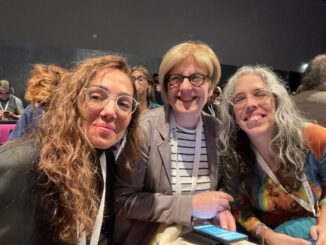
SemiotiX is a global information bulletin. Its aim is to provide periodic snapshots of the situation of semiotic research in the world, with photos, editorials by, and profiles of, active semioticians, mini-reviews of books, state-of-the-arts at a glance, and selective publicizing of scholarly events.
ISSN: 1916-7296