// archives

Semiotix XN-7 (2012)

A Michael (M.A.K.) Halliday Special

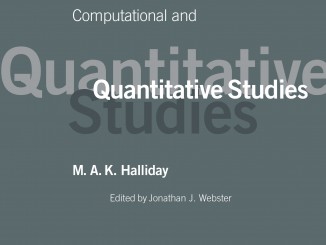
This issue of SemiotiX, the first to which I am contributing in my capacity as Associate Editor, focuses on the contribution to semiotics by the Australian linguistic M.A.K.  Halliday.   Three guest scholars provide tasters of what his work is about, what ideas underpin it and the way it has been adopted to look at visual [...]

Language as social semiotic in Halliday’s systemic functional linguistics

Michael Halliday is an internationally recognised scholar who, from the late 1950s, has contributed significantly to theories of language and related areas. Best known for developing systemic functional linguistics (SFL), he transformed views about language by making choice a core concept of his theory, where choice in the language system is between meanings rather structures [...]

Halliday and Multimodal Semiotics

Halliday’s (1978) social semiotic theory provides the basis for the study of semiotic resources other than language (e.g. images, architecture, music, mathematical symbolism, gesture, clothing etc) and, significantly, the interaction of semiotic resources in a field known as multimodal analysis or multimodality (e.g. Jewitt, 2009; Machin, 2007; O’Halloran, 2011) .  Indeed Halliday’s view of culture [...]

Multimodal Critical Discourse Analysis

Halliday’s work has also contributed many of its analytical tools for the kind of linguistic analysis carried out in Critical Discourse Analysis (CDA). CDA is probably the most comprehensive attempt to develop a theory of the inter-connectedness of discourse, power and ideology. The term ‘critical’ principally means unravelling or ‘denaturalizing’ ideologies expressed in discourse and [...]

The Collected Works of M. A. K. Halliday

When I joined Continuum (which is now part of the Bloomsbury Academic Group) back in 2007, the publishing of Professor Michael Halliday’s “Collected Works” was in full motion. It had a staggered release.  The first volume, “On Grammar”, was published in hardback in September 2002.  The last volume, “Language in Society”, published in HB in [...]

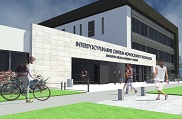
Poland’s Copernicus University to foster experimental semiotics research

Interview with Dr. Tomasz Komendzinski Translated & edited by Mikolaj Sobocinski I understand that you are creating an innovative pluridisciplinary centre at the Copernicus University in Torun (Poland). What is the purpose of this centre and which disciplines will it involve? At first, it could be useful to point out some similarities between universities and [...]

World Report – Epistemological Perspective on Simulation

Simulation is a creative and epistemologically-delicate process that has attracted growing attention since the 1990s, both in the natural and the social sciences. It is the imitation of the operation of a real-world process or system over time. The act of simulating something first requires that a model be developed; this model represents the key [...]

Meet your publisher: a post-scriptum

“Backward I see in my own days where I sweated through fog with linguists and contenders, I have no mockings or arguments, I witness and wait. “   – Walt Whitman, “Song of Myself”   There is a point in most social gatherings where the discussion veers onto the topic of what you do. In [...]

Three fascinating books

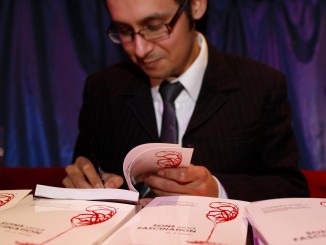
Fascination is a double-edged mental phenomenon. It captures and mobilizes our attention, and facilitates our absorption of the information a particular pattern foregrounds. But it also neutralizes our critical power. Some predators are wont to fascinate their prey with confusing chromatic design or unexpected movements. Humans are no stranger to this behavior when they produce [...]

Follow us

Notices

8th Global Conference
Visions of Humanity in Cyberculture, Cyberspace and Science Fiction
Thursday 18th July - Saturday 20th July 2013
Mansfield College, Oxford, United Kingdom
Call for Presentations
This inter-disciplinary and multi-disciplinary project aims to explore what it is to be human and the nature of human community in cyberculture, cyberspace and science fiction. In particular, the project will explore the possibilities offered by these contexts for creative thinking about persons and the challenges posed to the nature and future of national, international, and global communities.

Joint Organising Chairs:
Daniel Riha: rihad@inter-disciplinary.net
Rob Fisher: visions8@inter-disciplinary.net

13th International Pragmatics Conference (New Delhi, 8-13 September 2013). Host Institution: Indian Institute of Technology (IIT). Special theme: Narrative pragmatics: culture, cognition, context. Note that the conference is open to all other pragmatics-related topics as well (where pragmatics is concerned broadly as cognitive, social, and cultural perspectives on language and communication). Conference Chair: Rukmini BHAYA NAIR (IIT)
For further information: http://ipra.ua.ac.be